Sustained robotic operations: where proof really begins
By Joe Robinson, President of Solutions
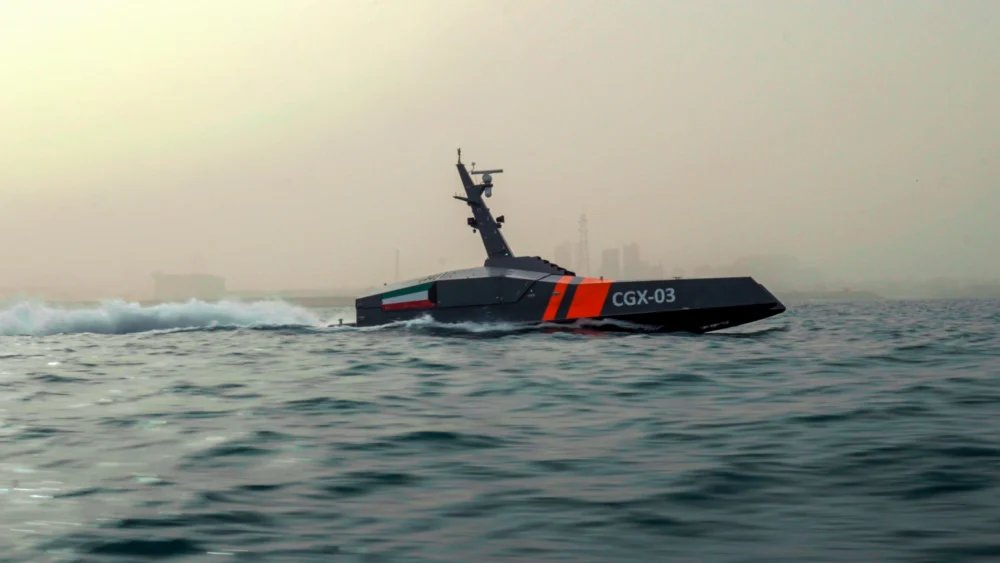
In the Middle East, uncrewed maritime systems are supporting continuous national surveillance operations in extreme heat, high salinity, congested waters and a complex security environment. Since August last year, our operations have been running around the clock in live conditions, generating more than 13,000 hours of operational experience.
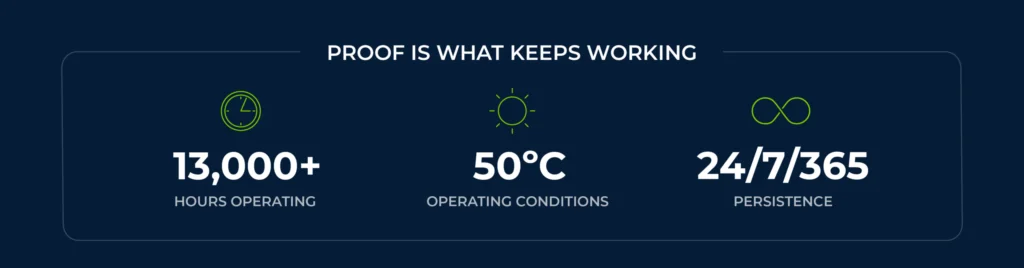
Of everything we’ve done over the years, this has been one of the clearest reminders that the real challenge in maritime autonomy is not proving a system can work. It is proving it can keep working to do the job it’s there to do. In this case, persistence: 24/7/365.
The fact that these systems are in place is not news in itself; autonomy and robotics are well past the stage of being seen as novel. Governments and businesses around the world are already exploring how to use them. The more important question now is what sustained operations reveal that one-off demonstrations do not: whether these systems can produce effective operational outcomes, consistently, over long periods of time.
Why persistence is hard
More often than not, operational failure is not simply a technology problem. Persistent operations fail because operating robotic systems at sea, continuously and at scale, is extraordinarily difficult – I know that because we’ve learnt the hard way.
I firmly believe the maritime domain is one of the harshest operating environments on the planet. We’re currently operating in the Middle East where temperatures regularly exceed 50 degrees. Add saltwater, humidity, corrosion, vibration and biofouling, and the result is constant stress on platforms and sensors. Our vessels have sucked up fishing gear. Cameras have melted in the heat. These are not ‘edge cases’; they are part of normal operations. Live use has exposed equipment limits that manufacturers have not had to solve before, which means new problems have had to be worked through in real time while service continuity is maintained.

Keeping systems operating in those conditions has never been down to one factor. It depends on an integrated delivery model combining technology, people and process. Maintenance cycles don’t always behave as expected. Fuel consumption changes with weather and mission profile. Sensors degrade incrementally. We have been faced with intermittent or deliberately disrupted communications, requiring systems that do not depend on constant connectivity. Decisions have to be made under pressure. Predictability was not a given at the start; it has been earned over time through experience, adaptation and a better understanding of how systems behave in the real world.
What sustained operations teach us
Success in robotics is determined by what is learned in operation: how systems degrade, where redundancy is needed, how maintenance patterns evolve, where recovery takes longer than expected, and how performance shifts under stress. This is where sustained operations create a real advantage. They build an understanding that cannot be replicated through showcases or trials, and that becomes important as autonomy moves into mainstream maritime use.
Much of this learning originated from our years of deepwater multi-AUV deployments in extreme conditions, where repeatable performance is crucial. We’ve worked in some of the most remote parts of the ocean, from the Pacific to the Indian Ocean and Antarctica, carrying out complex offshore data collection in water depths of up to 6,000 metres.
From trials to dependable infrastructure
As navies, coast guards and maritime authorities think more seriously about hybrid fleets, persistent surveillance and the protection of critical infrastructure, success will depend on whether uncrewed platforms can be relied upon as part of continuous operations. For uncrewed systems to contribute meaningfully, they must behave less like experimental technology and more like dependable infrastructure: available when required, predictable in performance, resilient under disruption.
Continuity in live security operations
Nowhere is this more apparent than in live maritime security operations. When systems are expected to operate for extended periods without intervention, the question is not simply whether they can perform a task, but whether they can keep doing it reliably as conditions change around them.
Even during periods of regional instability, surveillance must be maintained – this is something we’ve experienced first-hand. Operators remain onshore, out of harm’s way, but presence still has to be sustained. That requires more than capable platforms. It requires an operating model resilient enough to absorb disruption without losing continuity. It also requires outstanding people.
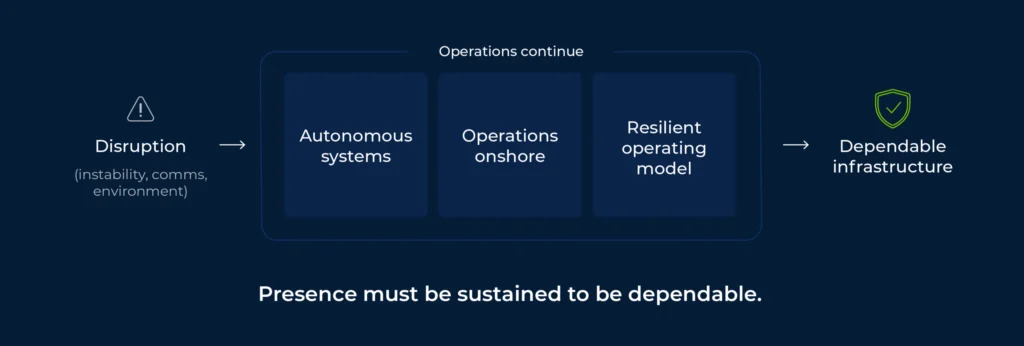
This continuity comes from sustained operational experience: understanding how systems behave over time and how operations must adapt. There are no shortcuts to that knowledge, and it is one of the clearest distinctions between theory and real-world capability.
Evidence that supports regulation
There is also a regulatory dimension to this experience. The more hours these systems accumulate in live operations, the more discussion can shift from what autonomy might do in theory to what it has demonstrably done in practice. Real operational evidence provides a stronger foundation for informed regulatory decision-making than hypothetical scenarios alone.
The same experience also shapes how operating models are designed, from maintenance and recovery to data, decision-making and people in the loop. It is how sustained operations become repeatable rather than heroic, and how autonomous systems begin to function as dependable infrastructure rather than experimental technology.
Proof is what keeps working
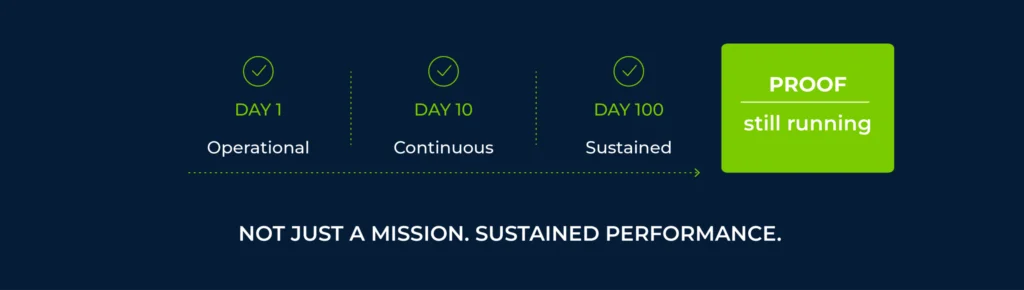
The implication for the sector is straightforward. We do not need more claims about what autonomy might one day achieve in ideal conditions. We need a clearer understanding of what sustained operations are already teaching us now: that operational maturity is built through discipline, adaptation and continuity. In maritime robotics, proof is not a single successful mission. It is what can be kept running on day 10, day 100 and beyond.